

Publish first, review after: how Merck reimagined website localization
Merck needed a way to scale its scientific platform into multiple languages quickly, without sacrificing quality. With the DeepL API, they found it.
Key takeaways
Merck’s SYNTHIA® website went from single-language platform to serving a global community in 13 languages.
By integrating the DeepL API, it turned months-long localization processes into less than a day.
Quality and speed go hand-in-hand. Merck now publishes first and reviews after, proof of the trust placed in DeepL.
1M+
characters translated13
language-specific versions live70%
of top SEO results are localized pages

How do you say "retrosynthesis" in Brazilian Portuguese?
Some content is easy to translate. Chemical terminology, scientific concepts, and specialized research are not. For the SYNTHIA® Retrosynthesis Software website from Merck KGaA - who are based in Darmstadt, Germany - the challenge was clear: scale a highly technical website into multiple languages, quickly, without letting translation quality undermine 350+ years of scientific reputation.
We sat down with Martin Seidensticker, Senior Marketing Manager at Merck, and the datagraphis team who made it happen: Digital Creative Director Denise Codrea and Software Developer Michel Steingaß.
It's a collaboration that turned a months-long localization process (think agency briefs, JIRA tickets, manual imports, and endless review rounds) into something that now takes less than a day.
A little context on SYNTHIA® Retrosynthesis Software
SynthiaOnline.com is a dedicated hub for retrosynthesis (the science of mapping the most efficient route to build complex molecules). It’s a go-to resource for chemists working in drug discovery, pharma, and academic research.
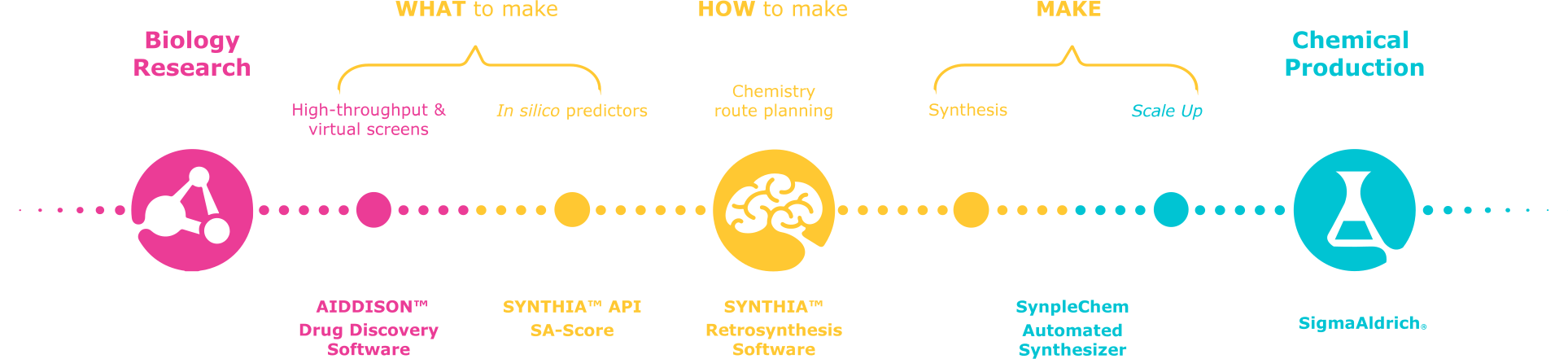
Launched in English just two years ago, the site has grown from 50 to 1,930 pages (a staggering increase of 3,660%) across 13 languages, and it's packed with research papers, webinars, white papers, application notes, and more.
So, what was the challenge?
For SYNTHIA®, the website sits at the centre of all its marketing activity. Every campaign, trade show, and sales tool leads back to it. But with everything in English, it was a one-size-fits-all approach that left a global audience under represented.
The Merck team knew that scientists across Japan, China, South Korea and beyond were actively searching for content in their own language. The demand was already there, and without a localized website Merck was missing a huge opportunity.
The obvious solution was to translate the site. But the options available simply weren't scalable.
Doing it manually was unworkable. The time and volume required were challenging enough, but when you factor in the level of accuracy required for an audience of PhD-level scientists, this approach simply wasn’t viable. Martin explains:
"We would have had JIRA tickets for each website to translate, the whole process would take a couple of months to get something done."
And the generic AI tool they had tried wasn't up to the job either. For highly technical scientific content it fell short when translating—technical terms not only lost their meaning entirely, but became funny sometimes. And the amount of correction needed afterwards meant it took just as long as doing it manually. As Martin put it:
"With the previous tool, especially with these technical terms, the translations just didn’t make any sense anymore. By publishing them, you would damage your reputation."
Martin Seidensticker, Senior Marketing Manager, Merck
Over to you, datagraphis
"Success means the website works well for international users. It should be easy to manage in different languages and easy to expand in the future."
Denise Codrea, Digital Creative Director, datagraphis
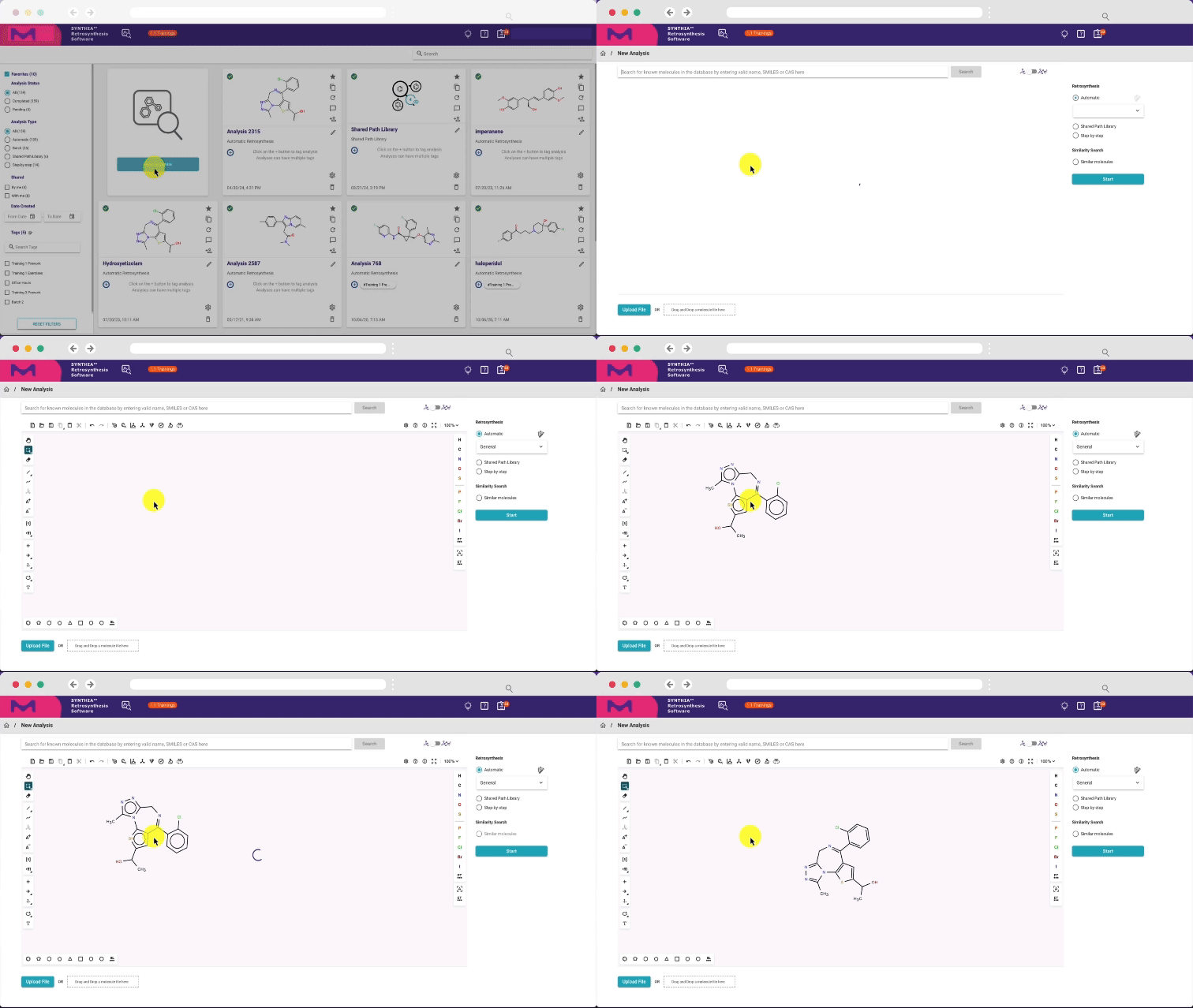
The team built the SYNTHIA® website on TYPO3, a content management system particularly well suited to multilingual websites.
To power the all-important translation, they connected it to the DeepL API, so rather than copying and pasting content into a separate translation tool, the translation happens where the content already lives.
In practice, this means Merck's editors never have to leave their TYPO3 environment. A new button sits alongside the existing content controls. Select what you want translated, click, and it's done. As Michel stated,
"It was very easy to set up, very easy to understand. There's a glossary, there's a button. Press it and everything's there."
Translating the (previously) untranslatable
Speaking of glossaries, for a platform built around highly technical scientific content, these were a key part of what made the project so fast and efficient. SYNTHIA® uses a lot of complex terminology that's difficult to translate accurately without the relevant context, which made DeepL glossaries a critical part of the process.
Datagraphis created glossaries of around 100-120 entries per language, covering the most critical terms. These ensured that style, terminology and key terms were translated consistently every time– across every language and webpage. It's what made the post-editing process so much more efficient, giving the team confidence to trust the output.
With the glossary in place and the integration up and running, the website was ready to scale. As Denise says of the DeepL API,
"It was a very perfect tool. I really like working with it."
What happened next
For Merck and datagraphis, everything changed now they can translate entire website pages at the click of a button. The way they work, the markets they reach, the results they see. Let's take a look.
AI-first, human-in-the-loop translation
"We go live first and then inform everyone—your new website is live in your language, please have a look."
Martin Seidensticker, Senior Marketing Manager, Merck
For Martin, it wasn't just about speed — it was confidence. The quality of DeepL's output meant the team no longer needed to read and correct every translation before going live. Instead, they flipped the process entirely. As Martin explains, "we wanted to trust the translation so much that we could just go live."
Translate, publish, then invite a native-speaking curator to review and refine. From the start, Martin always wanted a dedicated native speaker responsible for each language version—giving local markets ownership of their own content. They're still integral to the process, just freed up to focus on what they do best.
Localization in less than a day
"We knew the DeepL API would promise a fast workflow when we set up a new language."
Michel Steingaß, Software Developer, datagraphis
The impact on Datagraphis' workflow has been significant. To date, the team has translated well over a million characters across the website, and adding a new language now takes less than a day. Human review is still part of the process–but what previously meant briefing a Language Service Provider (LSP), negotiating costs, waiting weeks for output and then manually importing everything back into the CMS, now happens in a matter of hours. As Denise puts it,
"the whole organizational aspect—you need to give them an offer, talk about costs—it takes about a week just to have the conversations."
That overhead has now disappeared.
Tangible results in every language
“We see a lot of impact SEO wise—people really search for this and come to the website."
Martin Seidensticker, Senior Marketing Manager, Merck
The results speak for themselves. The SYNTHIA® website now spans 1,930 pages across 13 languages, and the SEO impact has been significant.
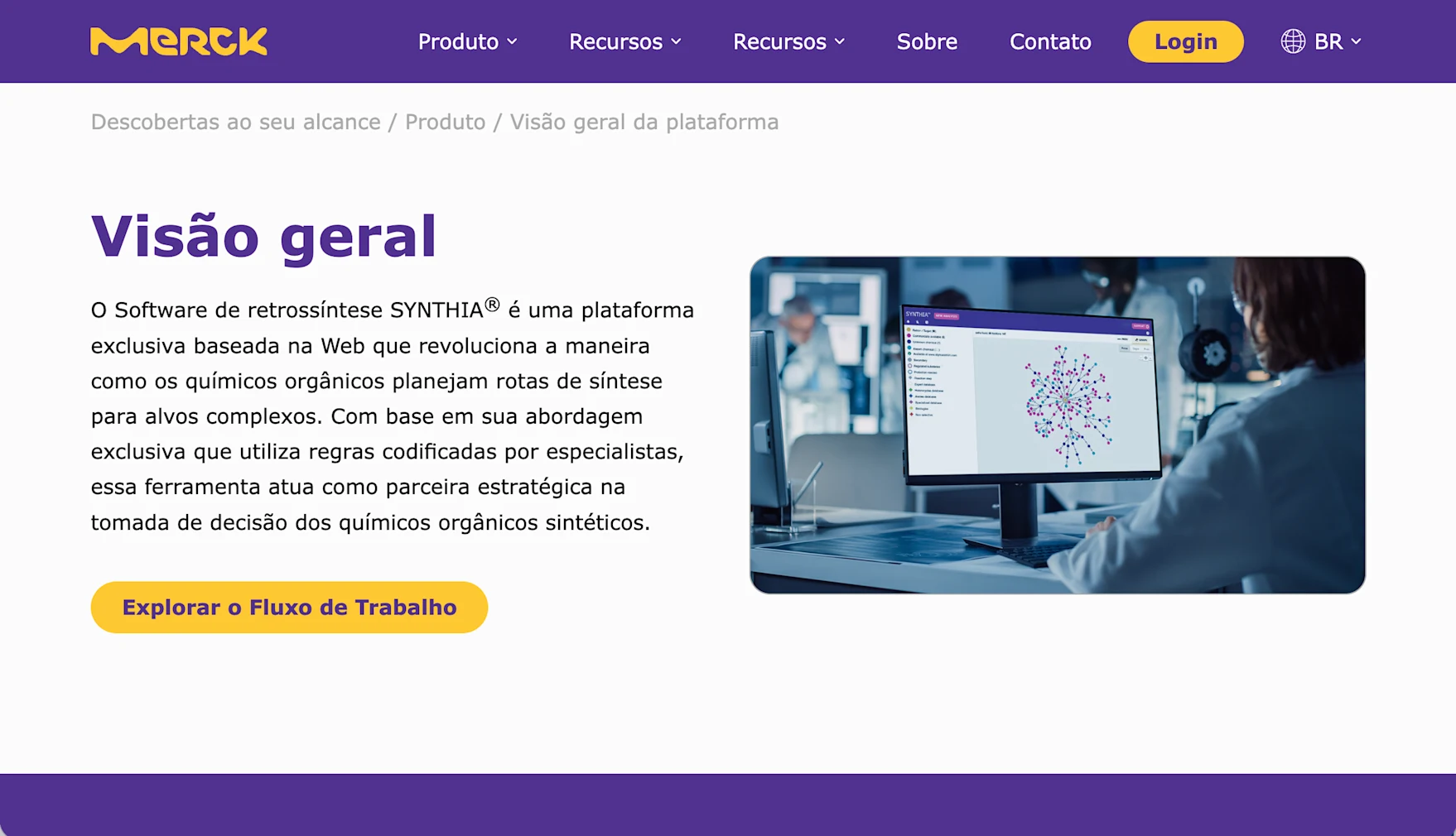
Scientists are finding the platform by searching in their own language, and the data backs it up. Of the top 10 pages, 7 are localized. Localized campaigns now have a destination that matches the full journey, in one language, from first search to conversion. As Martin says, "having the whole journey in a local language is really helpful—it makes it possible."
The icing on the cake
And then there was an unexpected success: Brazil. Martin admits he hadn't anticipated the demand for a Brazilian Portuguese version—but the numbers told a different story.
"I thought in the beginning, why do I have two Portuguese versions?"
But since launching the localized pages, traffic from Brazil has increased by 600%. "Brazil really stands out. They need their own language version."
A useful reminder that localization doesn't just serve the markets you expect, it opens doors you didn't know were there.
Ready to build with the DeepL API?
Design custom workflows that accelerate global growth with DeepL’s Language AI.
In this story
- How do you say "retrosynthesis" in Brazilian Portuguese?
- A little context on SYNTHIA® Retrosynthesis Software
- So, what was the challenge?
- Over to you, datagraphis
- Translating the (previously) untranslatable
- What happened next
- AI-first, human-in-the-loop translation
- Localization in less than a day
- Tangible results in every language
- The icing on the cake
Leverage DeepL’s advanced Language AI
Explore how your team can transform global communication with one comprehensive solution for all your language needs.