

Language AI you can trust: How to manage your brand reputation at scale
Key Takeaways
- Translation AI creates huge opportunities for global brands, but trust is the central challenge in AI-powered localization.
- In the AI era, translation quality must be “fit for purpose,” with different standards based on content type, audience, and risk.
- Localization teams should be elevated, not eliminated; they’re the experts who shape brand voice, nuance, and context for AI.
- AI translation is unavoidable for global brands, making control, customization, and governance essential to protecting reputation.
- DeepL’s Customization Hub helps enforce consistent brand voice at scale with glossaries, style rules, translation memory, and style profiles.
- DeepL's Language AI suite provides a controlled, scalable foundation for language-heavy workflows, giving teams both speed and brand-safe quality.
In today's rapidly evolving AI landscape, translation technology presents both extraordinary opportunities and significant risks for global businesses.
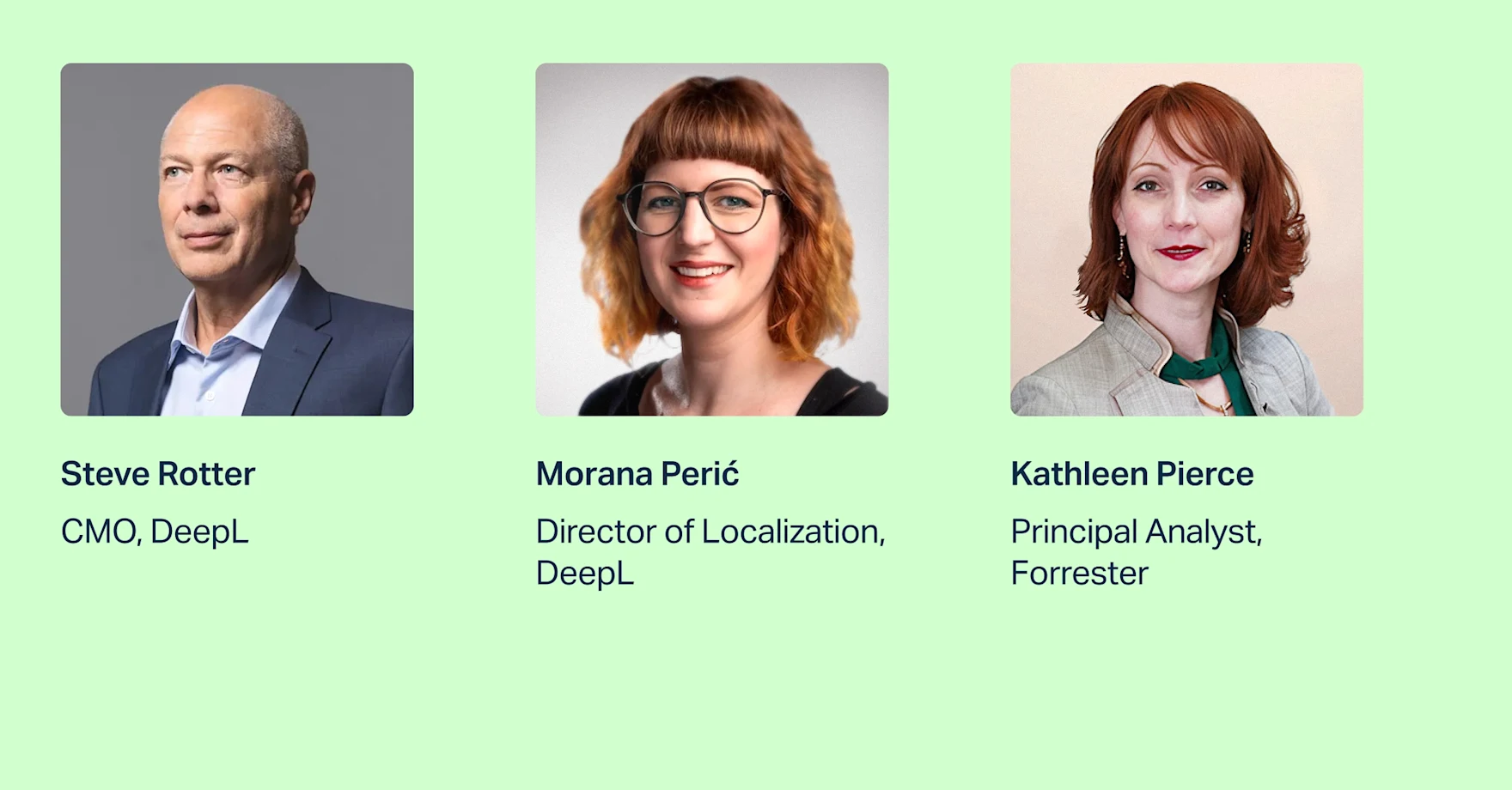
We wanted to explore how organizations can harness Language AI to stay in control of translation quality and protect brand integrity. To that end, we hosted a webinar with industry experts Kathleen Pierce, principal analyst at Forrester, and Morana Perić, director of localization at DeepL.
Kathleen brings over 25 years of experience across content strategy, sales enablement, localization, UI/UX, process optimization, compliance, and taxonomy. Morana has spent 15 years building scalable localization and content operations in tech.
Here are some of the highlights from our brand reputation-focused webinar.
Why trust is the core issue in AI-powered localization
“Localization AI feels like learning to use a chainsaw,” Kathleen explained during the webinar. “You need skill, you need strength, you need to know how to use it. It can do a lot for you, but it can also really backfire.”
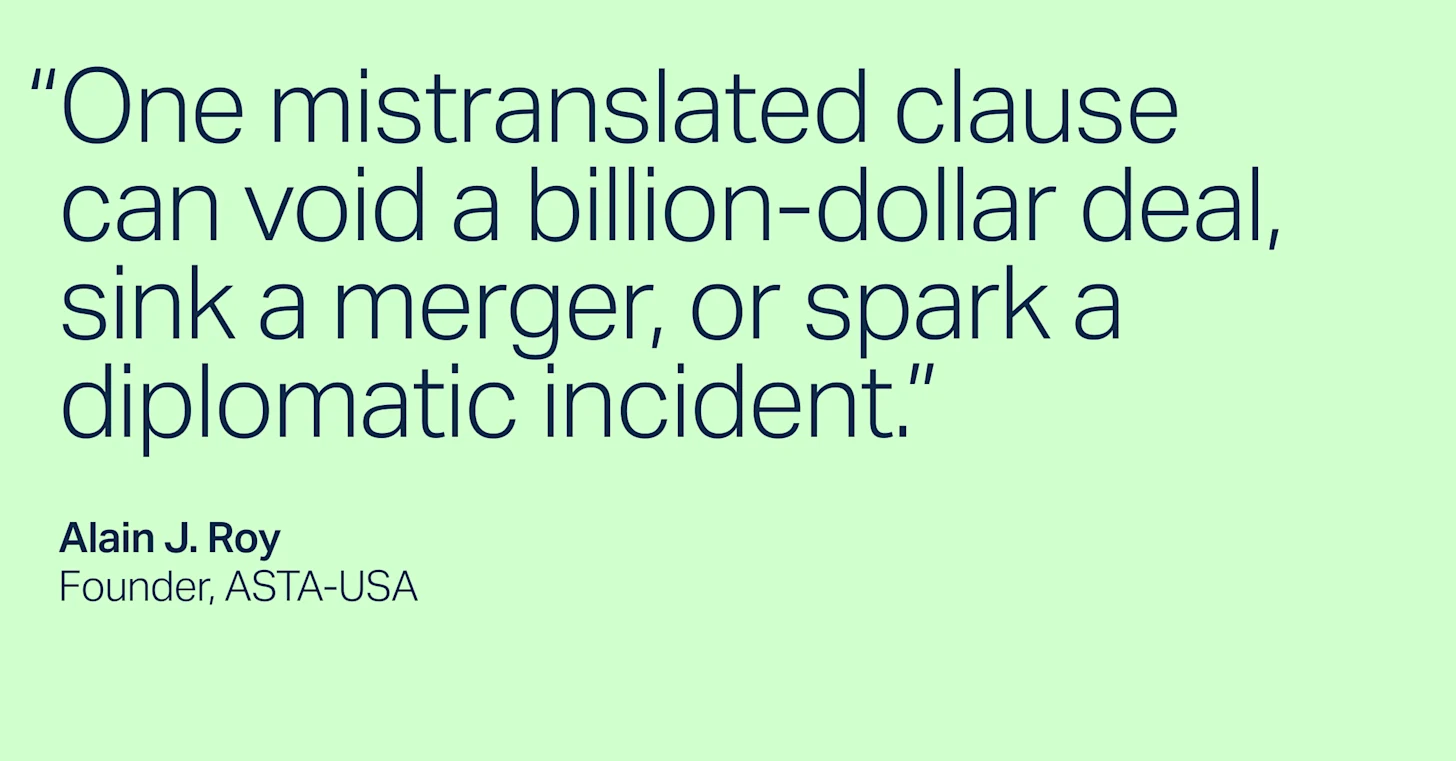
While Language AI offers unprecedented capabilities to scale global communications, the risks of getting it wrong can be severe.
That brings us to the heart of the issue: trust.
Forrester's research demonstrates what they call the “trust premium.” That’s the tangible business benefits that come from customer trust. When customers trust a brand, they're significantly more willing to purchase additional products, continue doing business, and even pay premium prices.
But when it comes to AI implementation, nine of the top 15 organizational concerns pertain directly to trust, whether it’s data privacy and compliance or overconfidence and inaccurate outputs.
The challenge is clear. How do you harness the power of Language AI without compromising the trust you’ve worked so hard to earn?
Why we need to redefine translation quality as “fit for purpose”
To protect brand reputation at scale, “good-enough” translation isn’t a single bar. We have to define quality as “fit for purpose” so each content type gets the right level of speed, control, and human oversight.
What “fit for purpose” quality really means
Building that trust starts with how you define quality. One of the strongest insights from our discussion was that translation quality can’t be a universal standard in the AI era.
"Quality should be redefined as fit for purpose," Kathleen advised. "A promo video needs different standards than a user form or legal contract. Quality must be fit for the audience, fit for the interaction."
Where human expertise still matters most
Defining quality this way also clarifies where human expertise still matters most:
- Idioms
- Business-specific terminology
- Context, style, and tone interpretation
Depending on the content and its audience, your organization can decide what level of control you need. And you can determine whether human review or full transcreation is necessary.
This more strategic approach to quality allows you to strike the right balance between speed, scale, and precision. It also enables you to allocate resources where they matter most, not apply the same standards everywhere.
How leading teams put fit-for-purpose quality into practice
We’re already seeing this approach in action. For example, Weglot applies a hybrid AI-and-human model for website translation. This approach combines automated quality checks with human oversight and aligns quality controls with content importance.
Morana echoed this from her hands-on experience at DeepL.
“We all want speed, quality, and lower costs. You can get your content out quickly, but you have to be comfortable with different levels of quality and investment. You might invest in transcreation, review, and research for certain types of content—but not all of it. That’s simply not possible.”
Morana also talked about how we implement this philosophy at DeepL. For example, all our Help Center communications are AI-generated and sent out without human review.
“We employ all of our tools—the glossary, the customization—so we're confident that this is fit for purpose. But there's a lot of thought behind that approach; we don't just automatically take the same action for every type of content."
Ultimately, building trust in your AI output requires strong control mechanisms within your translation system. It also demands continued human oversight where it truly matters.
After all, who understands linguistic complexity better than your own in-house localization experts?

Why AI should elevate, not eliminate, your localization teams
One concerning trend Kathleen observed is organizations laying off localization teams because of AI advancements. “That’s a big mistake,” she emphasized. “We need to elevate our localization teams, not decimate them!”
Language is complex, and human expertise is essential to guide AI implementation. Professional translators understand audience differences, context, cultural nuances, brand voice, and industry-specific terminology. However, someone must teach AI these things explicitly.
That’s where localization teams come in, moving beyond execution to become strategic advisors.
Instead of simply delivering translations, localization teams can help design the end-to-end translation workflow. They define processes, tools, and quality controls across the organization.
As Kathleen explained, “It used to be that localization teams were order-takers. They would receive orders to get a translation. Now, you should be positioning them as advisors so that they are helping all these other functions build a pipeline, building the process and technology and quality controls.”
Visit DeepL AI Labs to see our latest research into Language AI.
Why AI translation is unavoidable for global brands
Kathleen’s warning was clear: AI translation is inevitable. “This is water coming up through the floorboards. This is not something that we can escape.”
Without controlled, customized AI translation solutions, organizations might turn to generic translators. When that happens, you risk brand voice, miscommunication, and costly mistakes.
“How much do you care about your brand voice and people understanding what you’re saying?” Kathleen asked. Advanced, complex services and tech demand more than a generic LLM.
Morana reinforced this from her experience with localization teams.
“In this day and age, when we have all of this content coming in, you really need to know how to do this balancing act—where to invest into training your models, when to invest into having your people look at it. I don’t think there’s escaping working with technology today.”
How control is the new frontier in enterprise AI adoption
AI adoption brings undeniable opportunity but also significant risk. To manage it, your organization needs robust processes that tackle multiple actions:
- Clean up translation data
- Introduce the right controls
- Ensure your AI translation technologies accurately reflect brand voice across global markets
At DeepL, we've responded to these needs by launching our Customization Hub. It provides you with powerful tools like glossaries, style rules, translation memory, and style profiles. Together, they ensure your unique voice and terminology stay consistent across languages.
You can expand global communications without compromising trust by focusing on three pillars:
- Defining quality expectations by content type
- Elevating localization teams to strategic partners
- Implementing clear guardrails for AI and workflows
These pillars fine-tune your communications for global clients, internal staff, and anyone else who interacts with your organization.
Visit the DeepL Customization Hub, your control layer for brand voice in AI translation.
Protect your global brand voice with DeepL Language AI
Managing brand reputation at scale means building controlled, “fit-for-purpose” workflows where every asset reflects your voice and standards.
DeepL’s Language AI solutions give you that foundation. Glossaries, style rules, translation memory, and style profiles help protect terminology, tone, and intent across markets.
Our AI suite—Translator, Write, Voice, API, and Integrations—extends that control across every workflow where brand voice matters.
Contact sales to see how DeepL's Language AI can help you manage custom localization strategies at scale.
Take charge of your AI-powered translations: watch the webinar
The future isn't about choosing between human expertise and AI; it’s about finding the right synergy between them.
In our webinar, Translation AI you can trust: How to manage your brand reputation at scale, we break down how leading brands are balancing speed, scale, and quality to take charge of their AI translations and protect their brand voice.
You’ll see how to design smarter, more controlled localization workflows, with quality built in at every stage. Watch the full webinar.