

IA linguística em que pode confiar: Como gerir a reputação da sua marca em grande escala
Pontos-chave
- A IA de tradução cria enormes oportunidades para as marcas internacionais, mas a confiança é o principal desafio na localização impulsionada pela IA.
- Na era da IA, a qualidade da tradução deve ser «adequada ao objetivo», com padrões diferentes consoante o tipo de conteúdo, o público e o risco.
- As equipas de localização devem ser valorizadas, não eliminadas; são elas os especialistas que moldam a voz, as nuances e o contexto da marca para a IA.
- A tradução por IA é inevitável para as marcas internacionais, tornando o controlo, a personalização e a governança essenciais para proteger a reputação.
- O Customization Hub da DeepL ajuda a garantir uma voz de marca consistente em grande escala com glossários, regras de estilo, memória de tradução e perfis de estilo.
- O conjunto de ferramentas de IA linguística da DeepL fornece uma base controlada e escalável para fluxos de trabalho com grande volume de texto, proporcionando às equipas tanto rapidez como qualidade segura para a marca.
No panorama atual da IA, em rápida evolução, a tecnologia de tradução apresenta tanto oportunidades extraordinárias como riscos significativos para as empresas internacionais.
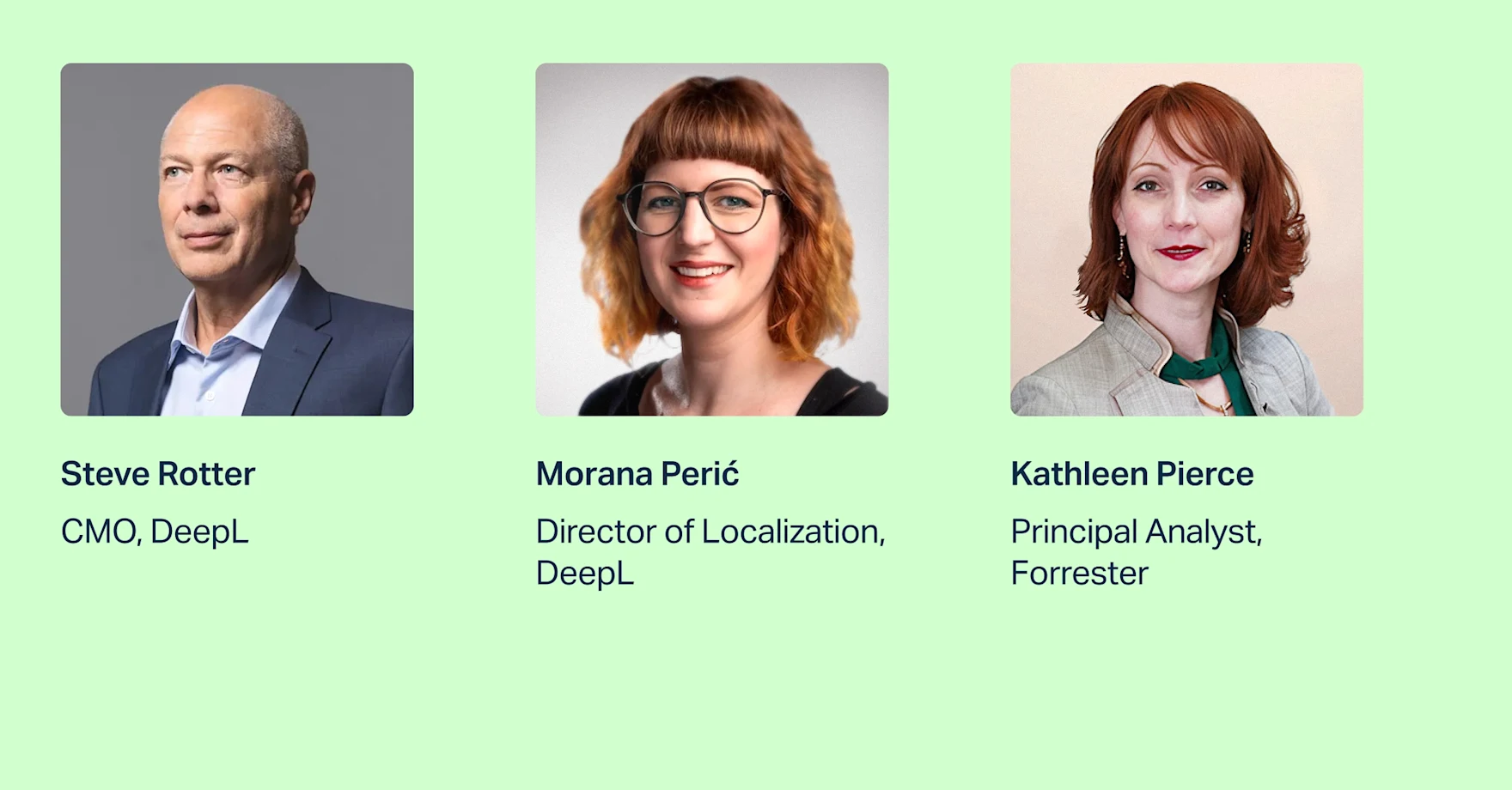
Queríamos explorar como as organizações podem aproveitar a IA linguística para manter o controlo da qualidade da tradução e proteger a integridade da marca. Para tal, organizámos um webinar com especialistas do setor Kathleen Pierce, analista principal da Forrester, e Morana Perić, diretora de localização da DeepL.
Kathleen conta com mais de 25 anos de experiência em estratégia de conteúdo, capacitação de vendas, localização, UI/UX, otimização de processos, conformidade e taxonomia. Morana passou 15 anos a desenvolver operações de localização e de conteúdo escaláveis no setor tecnológico.
Aqui estão alguns dos destaques do nosso webinar centrado na reputação da marca.
Por que razão a confiança é a questão central na localização impulsionada pela IA
«A IA aplicada à localização é como aprender a usar uma motosserra», explicou Kathleen durante o webinar. «É preciso ter habilidade, é preciso ter força, é preciso saber como usá-la. Ela pode fazer muito por si, mas também pode sair pela culatra.»
Embora a IA linguística ofereça capacidades sem precedentes para ampliar as comunicações internacionais, os riscos de errar podem ser graves.
Isso leva-nos ao cerne da questão: a confiança.
A investigação da Forrester demonstra o que eles chamam de “prémio de confiança”. Trata-se dos benefícios empresariais tangíveis que advêm da confiança do cliente. Quando os clientes confiam numa marca, estão significativamente mais dispostos a adquirir produtos adicionais, a continuar a fazer negócios e até mesmo a pagar preços mais elevados.
Mas quando se trata da implementação da IA, nove das 15 principais preocupações das organizações dizem respeito diretamente à confiança, quer se trate de privacidade e conformidade dos dados ou de excesso de confiança e resultados imprecisos.
O desafio é claro. Como aproveitar o poder da IA linguística sem comprometer a confiança que tanto se esforçou por conquistar?
Por que precisamos de redefinir a qualidade da tradução como «adequada ao objetivo»
Para proteger a reputação da marca em grande escala, uma tradução «suficientemente boa» não é um critério único. Temos de definir a qualidade como «adequada à finalidade», para que cada tipo de conteúdo obtenha o nível certo de rapidez, controlo e supervisão humana.
O que significa realmente a qualidade «adequada à finalidade»
A construção dessa confiança começa na forma como define a qualidade. Uma das conclusões mais marcantes da nossa discussão foi que a qualidade da tradução não pode ser um padrão universal na era da IA.
«A qualidade deve ser redefinida como adequada à finalidade», aconselhou Kathleen. «Um vídeo promocional requer padrões diferentes dos de um formulário de utilizador ou de um contrato legal. A qualidade deve ser adequada ao público, adequada à interação.»
Onde a experiência humana ainda é mais importante
Definir a qualidade desta forma também esclarece onde a experiência humana continua a ser mais importante:
- Expressões idiomáticas
- Terminologia específica empresarial
- Interpretação do contexto, estilo e tom
Dependendo do conteúdo e do seu público, a sua organização pode decidir de que nível de controlo necessita. E pode determinar se é necessária uma revisão humana ou uma transcriação completa.
Esta abordagem mais estratégica à qualidade permite-lhe encontrar o equilíbrio certo entre rapidez, escala e precisão. Permite-lhe também alocar recursos onde são mais importantes, em vez de aplicar os mesmos padrões em todo o lado.
Como as equipas líderes colocam em prática a qualidade adequada ao objetivo
Já estamos a ver esta abordagem em ação. Por exemplo, a Weglot aplica um modelo híbrido de IA e revisão humana para a tradução de sites. Esta abordagem combina verificações de qualidade automatizadas com supervisão humana e alinha os controlos de qualidade com a importância do conteúdo.
Morana confirmou isto com base na sua experiência prática na DeepL.
«Todos queremos rapidez, qualidade e custos mais baixos. Pode publicar o seu conteúdo rapidamente, mas tem de se sentir confortável com diferentes níveis de qualidade e investimento. Poderá investir em transcriação, revisão e pesquisa para determinados tipos de conteúdo — mas não para todo o conteúdo. Isso simplesmente não é possível.»
Morana também falou sobre como implementamos esta filosofia na DeepL. Por exemplo, todas as nossas comunicações do centro de ajuda são geradas por IA e enviadas sem revisão humana.
“Utilizamos todas as nossas ferramentas — o glossário, a personalização —, pelo que estamos confiantes de que isto é adequado ao objetivo. Mas há muita reflexão por trás dessa abordagem; não tomamos automaticamente a mesma medida para todos os tipos de conteúdo.”
Em última análise, criar confiança nos resultados da IA requer mecanismos de controlo fortes no seu sistema de tradução. Exige também uma supervisão humana contínua onde é realmente importante.
Afinal, quem compreende melhor a complexidade linguística do que os seus próprios especialistas em localização internos?
Por que razão a IA deve valorizar, e não eliminar, as suas equipas de localização
Uma tendência preocupante que Kathleen observou é a de organizações que estão a dispensar equipas de localização devido aos avanços da IA. «Isso é um grande erro», enfatizou ela. «Precisamos de valorizar as nossas equipas de localização, não de as dizimar!»
O idioma é complexo, e a experiência humana é essencial para orientar a implementação da IA. Os tradutores profissionais compreendem as diferenças entre públicos, o contexto, as nuances culturais, a voz da marca e a terminologia específica do setor. No entanto, alguém tem de ensinar explicitamente estas coisas à IA.
É aí que as equipas de localização entram em cena, indo além da execução para se tornarem consultores estratégicos.
Em vez de se limitarem a entregar traduções, as equipas de localização podem ajudar a conceber o fluxo de trabalho de tradução de ponta a ponta. Elas definem processos, ferramentas e controlos de qualidade em toda a organização.
Como explicou Kathleen: «Antigamente, as equipas de localização limitavam-se a receber pedidos. Recebiam pedidos para fazer uma tradução. Agora, deve posicioná-las como consultoras, para que ajudem todas as outras funções a construir um pipeline, desenvolvendo o processo, a tecnologia e os controlos de qualidade.»
Visite o DeepL AI Labs para ver a nossa mais recente investigação sobre IA linguística.
Por que razão a tradução por IA é inevitável para as marcas internacionais
O aviso de Kathleen foi claro: A tradução por IA é inevitável. «Isto é como água a subir pelo soalho. Não é algo de que possamos escapar.»
Sem soluções de tradução por IA controladas e personalizadas, as organizações poderão recorrer a tradutores genéricos. Quando isso acontece, corre-se o risco de comprometer a voz da marca, falhas de comunicação e erros dispendiosos.
“Quão importante é para si a voz da sua marca e que as pessoas compreendam o que está a dizer?” perguntou Kathleen. Serviços e tecnologias avançados e complexos exigem mais do que um LLM genérico.
Morana reforçou esta ideia com base na sua experiência com equipas de localização.
“Nos dias de hoje, com todo este conteúdo a chegar, é realmente necessário saber como fazer este equilíbrio — onde investir na formação dos seus modelos, quando investir em ter o seu pessoal a analisá-los. Não creio que haja como escapar ao trabalho com a tecnologia hoje em dia.»
Como o controlo é a nova fronteira na adoção da IA nas empresas
A adoção da IA traz oportunidades inegáveis, mas também riscos significativos. Para gerir isso, a sua organização precisa de processos robustos que abordem várias ações:
- Limpar os dados de tradução
- Introduzir os controlos adequados
- Garantir que as suas tecnologias de tradução com IA refletem com precisão a voz da marca nos mercados internacionais
Na DeepL, respondemos a estas necessidades com o lançamento do nosso Customization Hub. Este centro fornece-lhe ferramentas poderosas como glossários, regras de estilo, memória de tradução e perfis de estilo. Em conjunto, garantem que a sua voz e terminologia únicas se mantêm consistentes em todos os idiomas.
Pode expandir as comunicações internacionais sem comprometer a confiança, concentrando-se em três pilares:
- Definir expectativas de qualidade por tipo de conteúdo
- Elevar as equipas de localização ao estatuto de parceiros estratégicos
- Implementar diretrizes claras para a IA e os fluxos de trabalho
Estes pilares aperfeiçoam as suas comunicações para clientes internacionais, colaboradores internos e qualquer outra pessoa que interaja com a sua organização.
Visite o DeepL Customization Hub, a sua camada de controlo para a voz da marca na tradução por IA.
Proteja a voz da sua marca internacional com a IA linguística da DeepL
Gerir a reputação da marca em grande escala significa criar fluxos de trabalho controlados e «adequados ao objetivo», em que cada recurso reflete a sua voz e os seus padrões.
As soluções de IA linguística da DeepL proporcionam-lhe essa base. Glossários, regras de estilo, memória de tradução e perfis de estilo ajudam a proteger a terminologia, o tom e a intenção em todos os mercados.
O nosso conjunto de IA — Tradutor, DeepL Write, DeepL Voice, API e Integrations — estende esse controlo a todos os fluxos de trabalho em que a voz da marca é importante.
Contacte o departamento de vendas para ver como a IA linguística da DeepL pode ajudá-lo a gerir estratégias de localização personalizadas em grande escala.
Assuma o controlo das suas traduções alimentadas por IA: assista ao webinar
O futuro não se resume a escolher entre a experiência humana e a IA; trata-se de encontrar a sinergia certa entre ambas.
No nosso webinar, IA de tradução em que pode confiar: Como gerir a reputação da sua marca em grande escala, explicamos como as marcas líderes estão a equilibrar velocidade, escala e qualidade para assumir o controlo das suas traduções com IA e proteger a voz da sua marca.
Irá ver como conceber fluxos de trabalho de localização mais inteligentes e controlados, com qualidade incorporada em todas as fases. Assista ao webinar completo.