

The Buyer's Guide to Translation APIs
A practical framework for evaluating translation automation in 2026 — before the architecture, vendor, and compliance commitments get expensive to unwind. Covers the eight dimensions that actually determine quality, latency, and risk, plus benchmark data most vendor comparisons leave out.
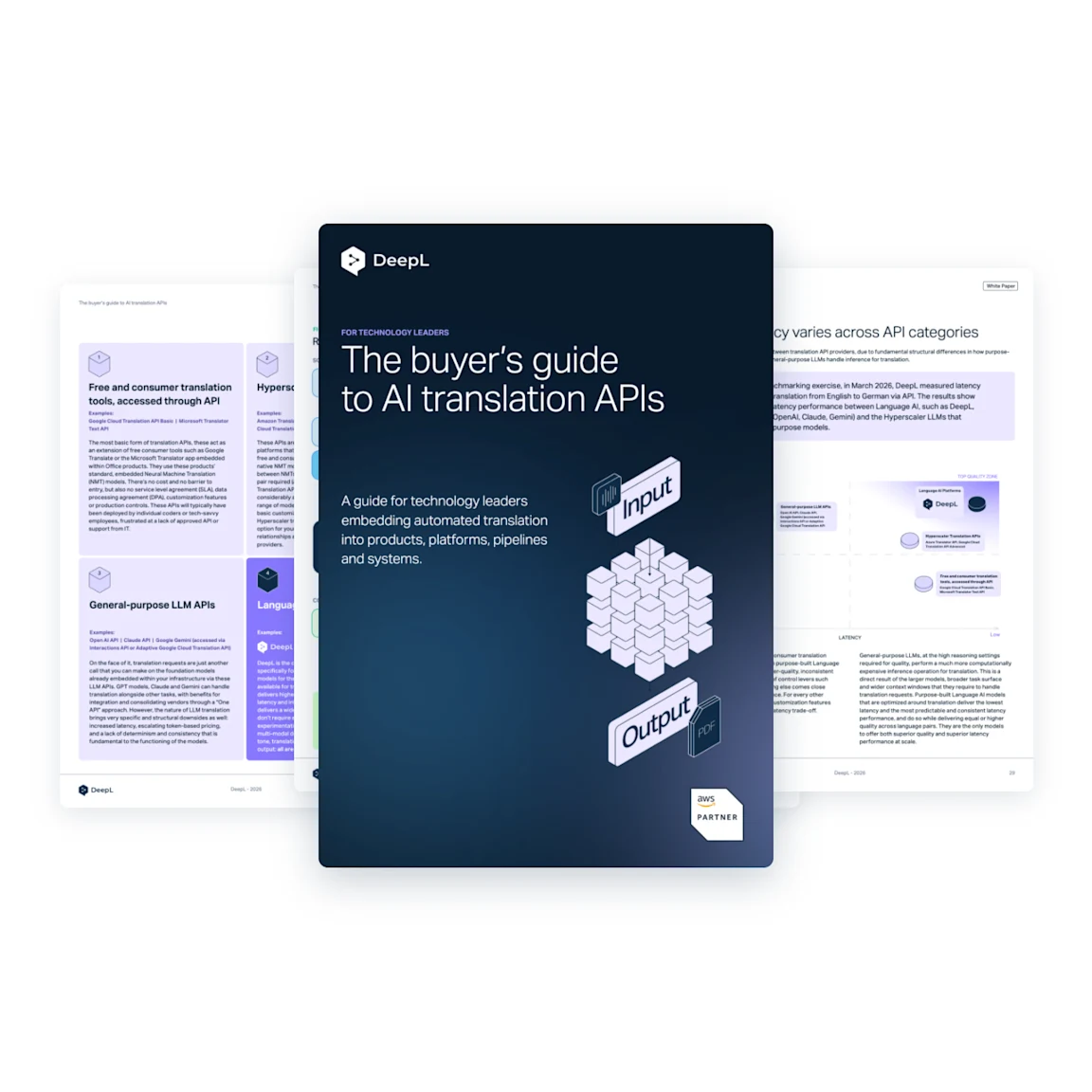
Get your copy
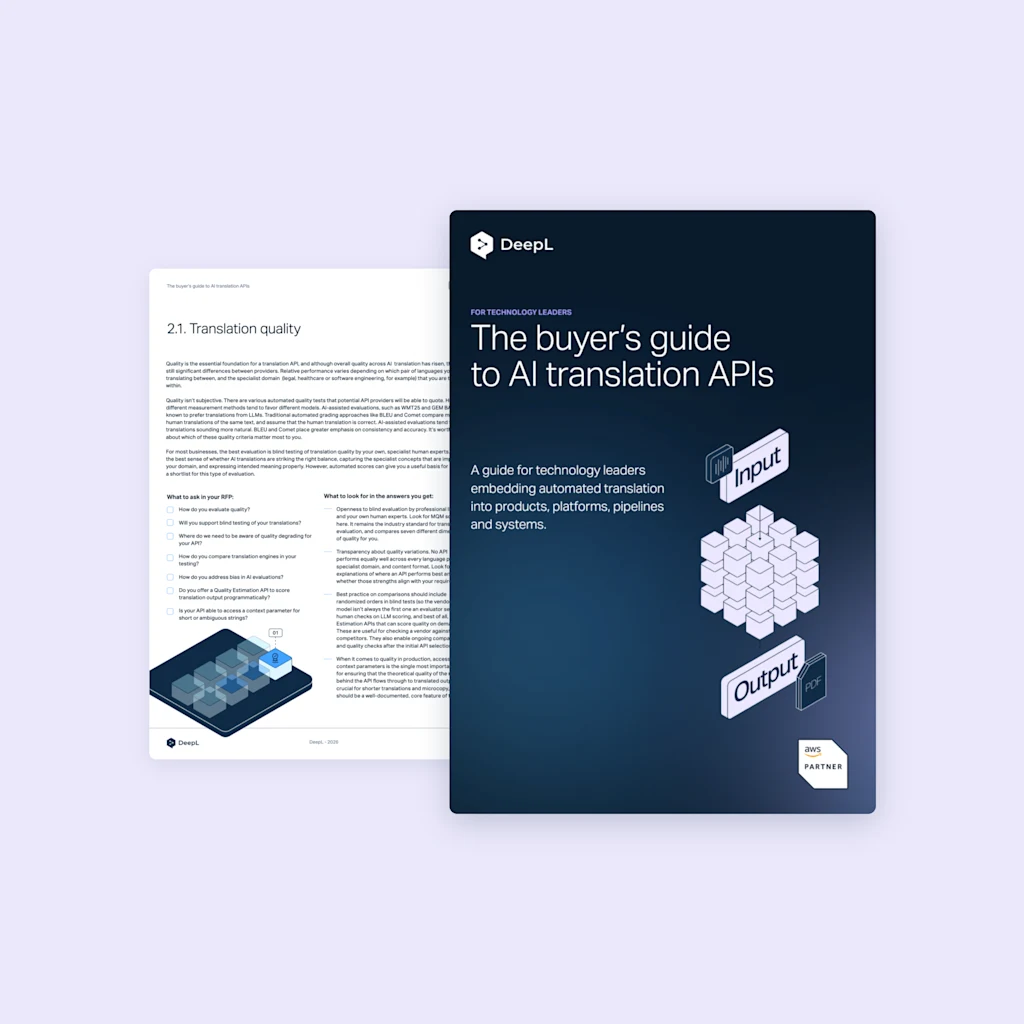
Download The Buyer's Guide to Translation APIs and get:
- An 8-dimension evaluation framework for translation APIs — quality, latency, coverage, and more
- A breakdown of why quality and latency carry the most business risk, and deserve the most attention in evaluation
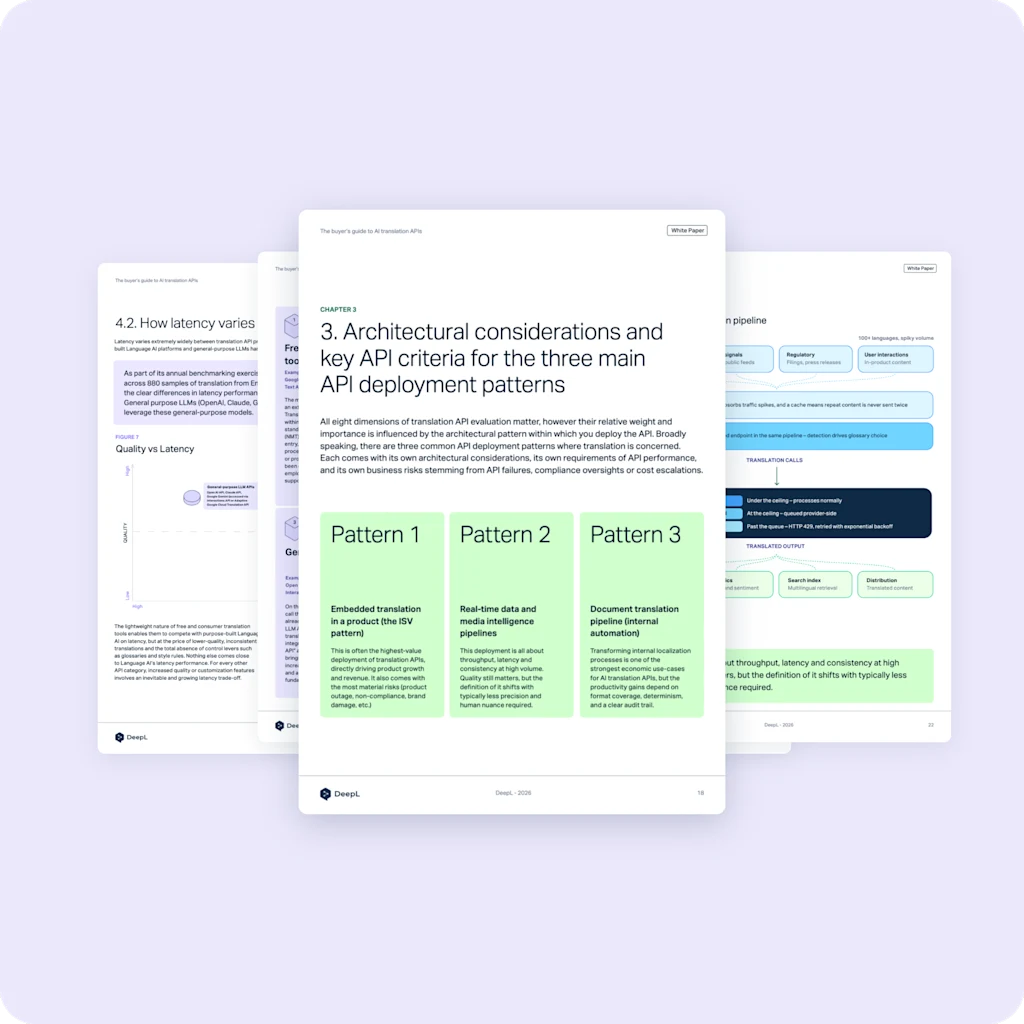
- Real-world architecture patterns for embedded, real-time, and document translation
Why this guide
Not a vendor comparison chart — a practical framework for the technical decision-makers evaluating translation automation in 2026.
Built for Technical Decision-Makers
Written for engineering and product leaders evaluating translation infrastructure. The guide covers the decisions that matter for architecture, procurement, and risk. No code walkthroughs required.
Quality and Latency
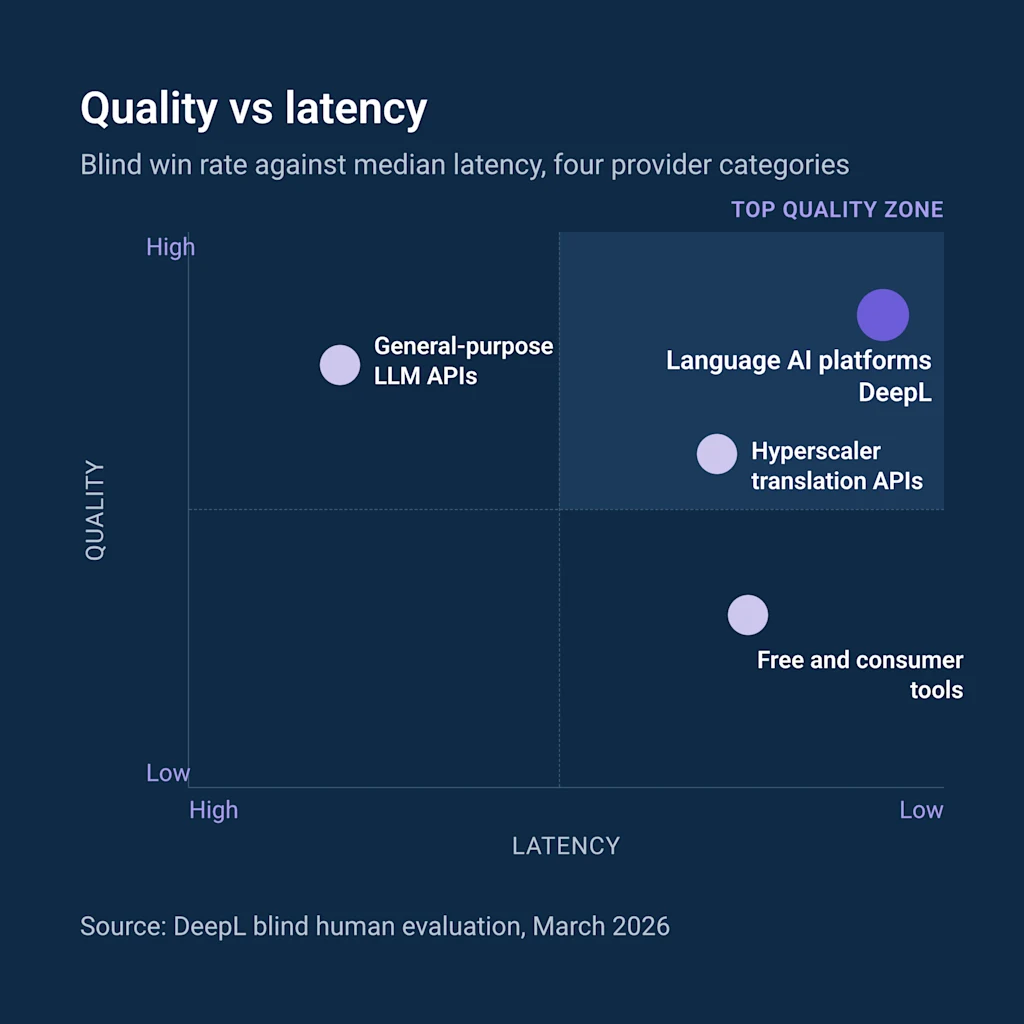
Quality and latency have the biggest influence on translation API performance and business impact. They're also the two dimensions evaluation teams pay least attention to. This guide covers why, and what separates providers.
Built from production patterns
Drawn from the architectural patterns DeepL sees across real customer deployments: embedded product translation, real-time data pipelines, and document automation at scale.
94%
Blind evaluation win rate vs. competitors100%
Win rate vs. Google Translate & Microsoft TranslatorUp to 29x
Faster median latency than general-purpose LLMs1,000+
Organizations running the DeepL API in productionMake the evaluation call with the full picture
Most translation API decisions are made on incomplete information — and it surfaces later as a quality issue, a compliance finding, or an architecture commitment that's expensive to unwind. This guide gives you the framework to get it right the first time.