The future of SEO is multilingual and AI-driven
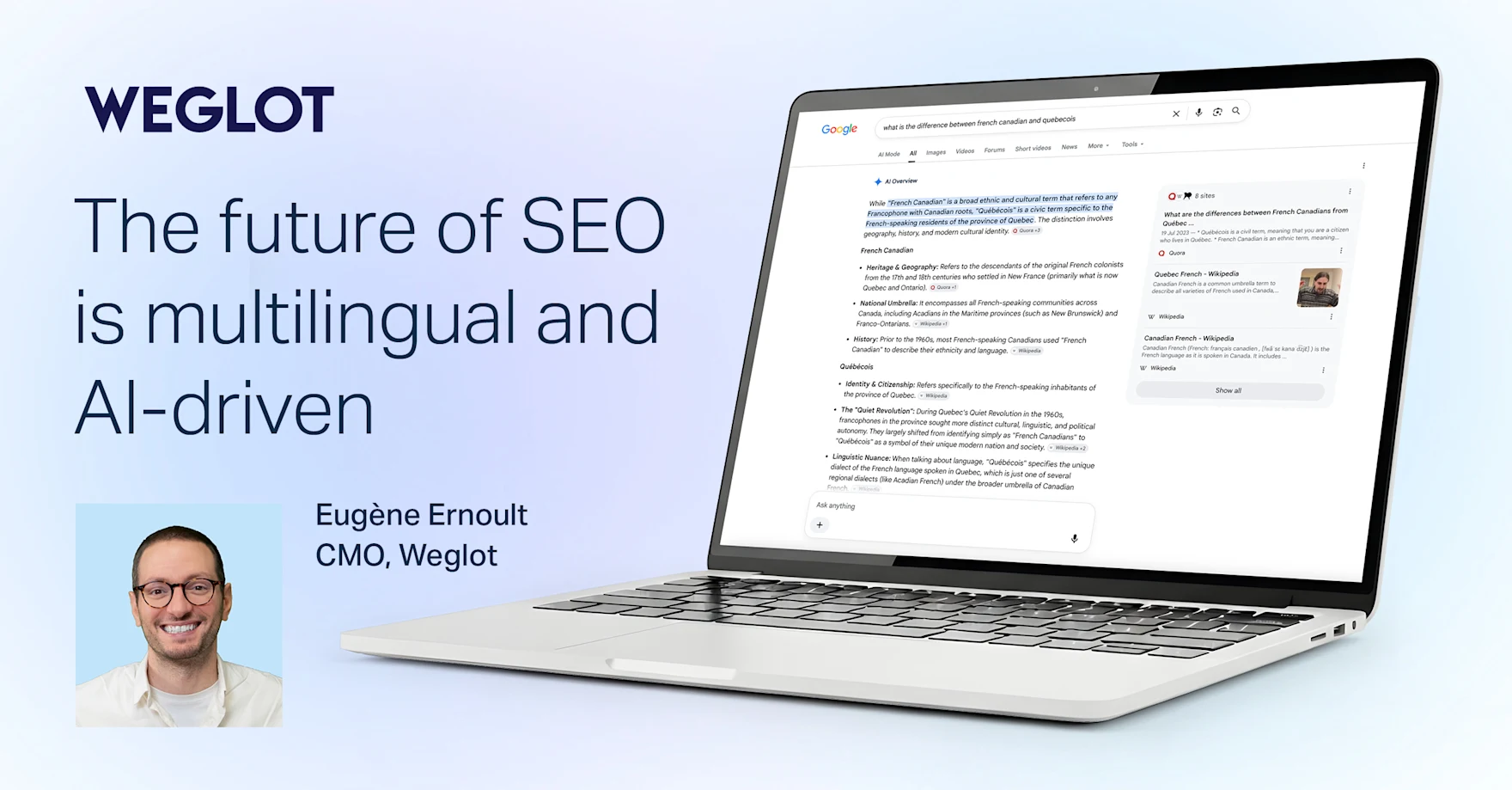
Search used to be about ranking a page for your chosen keyword. This is still a solid goal, but it does make a single-language content strategy more difficult to defend. AI search now answers questions before users ever click a result across dozens of languages. If you've built a discoverability strategy only around English, you could already be facing the consequences.
The biggest problem with that strategy is that nearly half of all sites are published exclusively in English — but this only reaches a minority of the globe. For every market in which your content doesn't exist in the local language, you're absent from AI-driven search. Let's look at what this shift means and what you need to get right in order to stay visible.
What AI search means for multilingual discoverability
AI-powered search will show results in different languages based on each user. For example, a French-speaking customer will see content from French-language sources. If those sources don't include your site, your brand doesn't appear.
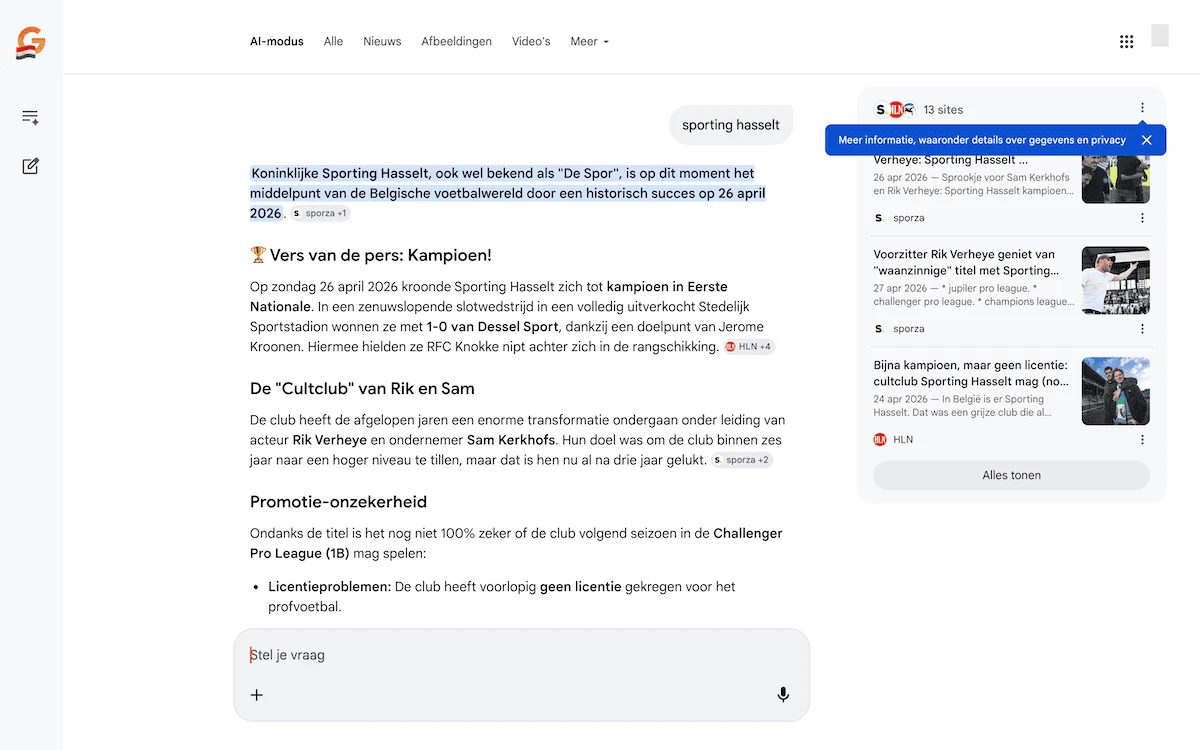
There are a few ways this plays out:
- According to TechCrunch, Google's AI overviews reach billions of users per month. They cover over 40 languages across 200 countries.
- SE Ranking believes around 30% of searches show an AI overview.
- Graphite reports that total search usage has grown around 25% worldwide, through a combination of traditional search and AI platforms.
Weglot's research into multilingual AI answer engine optimization found a 431% gap in AI citations between translated and untranslated e-commerce sites. If a page doesn't exist in a specific language, AI can't retrieve and display it.
The business case for multilingual content
Research consistently backs the commercial case for multilingual content. We’ve written previously about the critical importance of localizing marketing content — for instance that 75% of consumers will look elsewhere when they can’t find content in their own language — and data on multilingual e-commerce purchasing habits tells a similar story: The majority of shoppers prefer to buy from a site that offers information in their own language.
The implication is straightforward: A multilingual site gives non-English customers a native experience. But it's AI that decides which content to surface — and it can only surface what exists.
Weglot + DeepL
Партнерство, обслуживающее более 55 000 клиентов и способствующее повышению коэффициента конверсии на 44 %.
What multilingual SEO requires in an AI-first environment
AI search works under the same technical foundations as regular multilingual SEO, mainly because AI also relies on crawlable, properly structured content:
- Language-specific URLs. Subdirectory (yoursite.com/fr/) or subdomain (fr.yoursite.com) structures give each language version its own crawlable and independently indexable URLs.
- Hreflang tags. These tell search engines which language to serve to a user based on their location and browser settings, while preventing duplicate content issues.
- Translated metadata. Untranslated page titles and meta descriptions are some of the most common reasons translated pages fail to rank in the languages they're published in.
While AI can evaluate context, tone and coherence, if a page feels machine-generated or lacks the depth of the source, that content will underperform.
How keyword rankings changed to AI citations (and why)
Traditional SEO centers around ranking on page one for your target keyword and driving clicks. AI-powered search introduces a different kind of visibility that may not even involve a click.
A citation in Google AI Overviews or an LLM is binary; it will either get cited or it won’t. This citation happens in each user language. So your English content could perform well, while still being invisible to French, Spanish or German speakers.
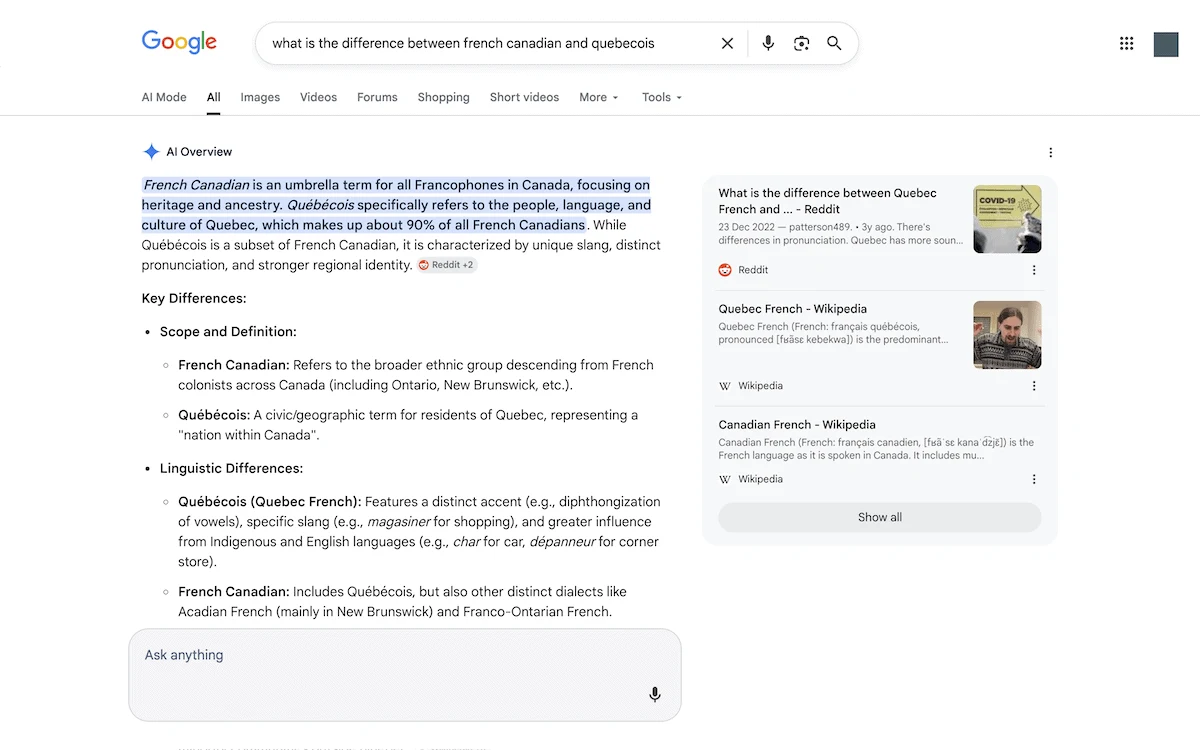
AI search rewards content that can be parsed and is available in the user's language, rather than having a single optimized page. AI systems are evaluating closer to E-E-A-T than many realize — and this is applied simultaneously across every language your site serves.
What the data reveals about language and AI citations
Weglot's analysis of 1.3 million citations across a number of AI systems measures how much language shapes AI visibility. We found that:
- Adding a second translation to a monolingual site saw uncited content drop from 431% to 22%.
- Translated sites typically perform better for all their languages — on average 24% more total citations per query, including a 16% increase in citations for the original content.
- LLMs showed that untranslated sites received around 4% fewer citations, on average, when queries were run in English.
The brands that adapt now will be the ones AI recommends later
AI-powered multilingual search operates on the same fundamentals as traditional SEO: machine-readable structures, properly tagged language variants. But now, the stakes are higher than they have ever been. A single-language site isn't just missing rankings; it's absent from AI-generated answers for the majority of the world's internet users.
The businesses that build this infrastructure now will accumulate citation authority in markets their competitors haven't entered yet. That's not a content strategy. It's a compounding advantage.