

Scaling trust in AI: A conversation with our CFO on building for the long term
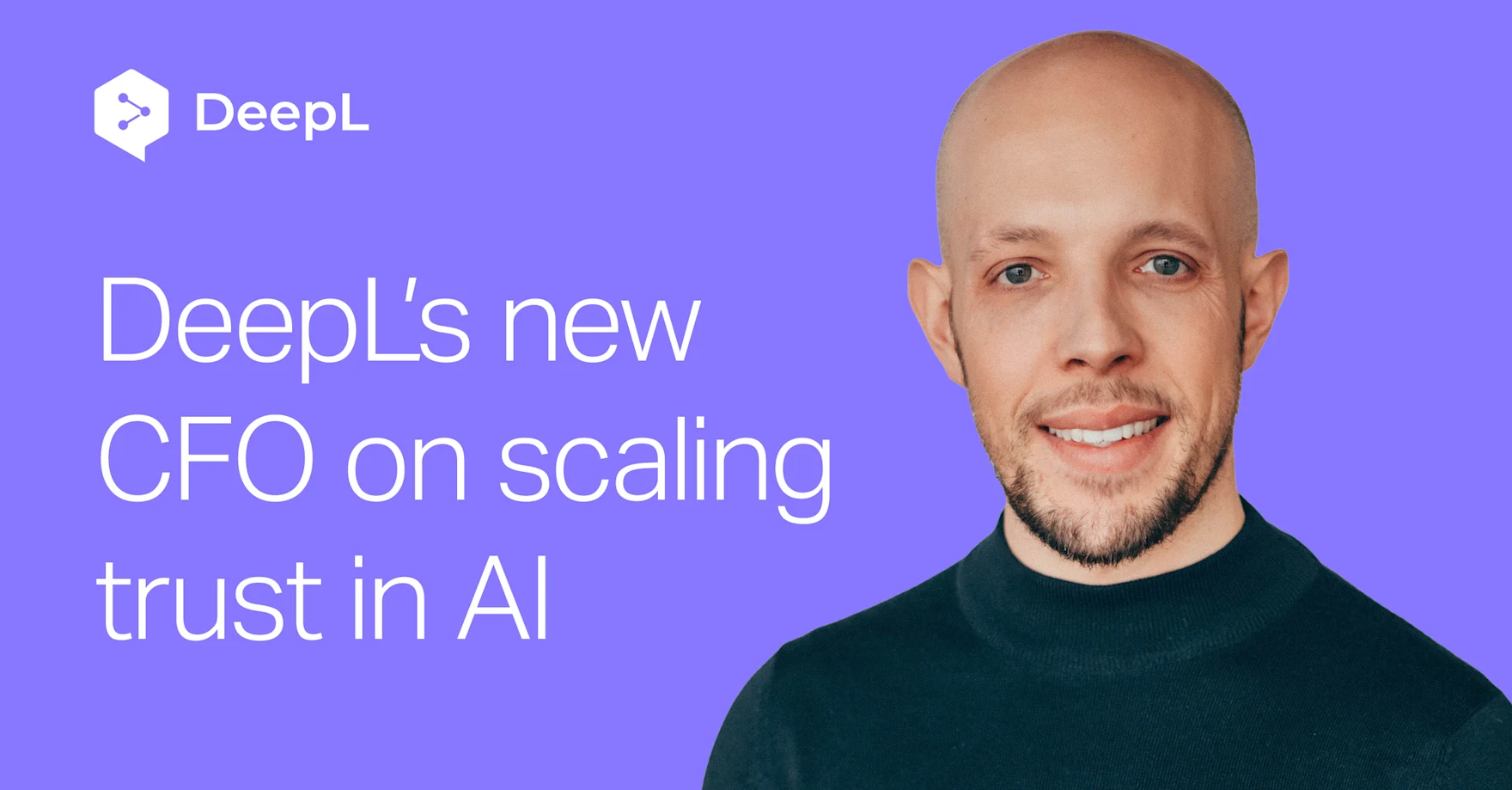
World-changing AI innovation requires exceptional technical and research capabilities. It requires the ability to translate these cutting-edge capabilities into end-to-end products that earn the trust of enterprise organizations globally.
Above all, it requires a financial strategy that underpins all of these things with a foundation to keep innovating, keep building and keep delivering on quality, accuracy and trust.
Get this right, and you don’t just grow. You build sustainably for the long term. You get technological advantage and global credibility. And that’s when really exciting things can happen.
Few people understand this as well as Martino Cadoni.
He’s built a reputation for successfully scaling businesses and preparing them for their next chapter, having played a lead role in the exits and listings of companies including GE Capital, HSBC and, most recently, Klarna, the European fintech pioneer that went public on the NYSE in September 2025.
Martino is determined that Europe needs not just more AI unicorns but more decacorns of this type of scale and impact. He joined DeepL as Chief Financial Officer in November, with a mission and a vision to make that happen.
We caught up with Martino to discuss the opportunity for DeepL in 2026 and beyond, the unique characteristics of the business that deliver its right to win on a global scale, and the key elements of growth and financial strategy that will enable us to deliver on that potential.
How do you see the opportunity for DeepL in 2026?
DeepL is a compelling business to join at this moment in time, because it sits at the intersection of breakthrough technology, real-world impact, and responsible scaling.
In a space that’s crowded with hype, this company has built a genuinely differentiated AI platform.
DeepL is known for quality, accuracy and trust, and for solving a very concrete problem at global scale: enabling people and businesses to communicate seamlessly across 100+ languages. That combination of technical depth and everyday usefulness is rare, and it creates strong, durable demand.
We’ve reached a pivotal stage in the company’s growth where we are now scaling across enterprise customers, geographies, and use cases beyond language, particularly with Voice and Agentic AI.
This is the phase where a CFO can have real impact: helping the company scale efficiently with disciplined, long-term investments.
DeepL combines European roots with global ambition. It has a unique DNA in AI research that goes back to before the arrival of generative AI.
This has produced a density of talent, and breadth of expertise and perspectives, that few other AI companies can match. DeepL translates this into trusted, end-to-end products that deliver value for over 200,000 business customers and nearly half of the Fortune 500.
The mix of world-class engineering, strong values, and a clear path to becoming a global category leader is particularly exciting.
We have an opportunity to define what excellent, sustainable AI-led growth looks like.
DeepL combines European roots with global ambition. It has a unique DNA in AI research that goes back to before the arrival of generative AI.
What makes DeepL stand out from other AI and tech businesses?
Simply put, DeepL stands out with its laser focus on building proprietary models, owning the full stack, and deploying AI in a thoughtful, responsible way.
All of this aligns strongly with how I believe AI companies should be built for the long term. It creates not just technological advantage, but also credibility with customers, regulators and partners.
DeepL combines technical ambition with financial discipline, and that delivers real differentiation. We’ve taken a long-term approach to AI development, prioritizing quality, reliability, and real customer value over hype or visibility.
As a result, our products are deeply embedded in customer workflows and deliver tangible outcomes, which drives industry-leading retention rates and long-term customer relationships.
Capital allocation is another important differentiator.
Despite operating in a capital-intensive AI environment, DeepL has scaled meaningfully with a very efficient use of capital compared to many of its peers. Its investments have been focused on areas that strengthen long-term differentiation, such as proprietary models and core infrastructure, rather than pursuing growth at any cost.
By building and controlling our own technology stack, we’re able to align product usage, cost efficiency, and pricing, which supports sustainable economics as the business grows.
DeepL combines technical ambition with financial discipline, and that delivers real differentiation. We’ve taken a long-term approach to AI development, prioritizing quality, reliability, and real customer value over hype or visibility.
What’s your vision for how, and how fast, DeepL can grow?
I’m here to help build a generational technology company from Europe, one that stays relevant, trusted, and economically strong over the long term, rather than optimising for hype cycles. Success is measured not just by how fast DeepL grows, but by its ability to consistently deliver value, attract great talent, and make sound decisions as it scales.
As our product becomes more deeply embedded in professional and enterprise workflows, growth should increasingly come from deeper adoption and long-term customer relationships, not just user acquisition.
When it comes to expansion, we can be both globally ambitious and selective. The opportunity is to grow worldwide while preserving the attributes that differentiate DeepL: quality, trust, security, and responsible use of AI.
Prioritizing markets and customer segments where those qualities matter most will support sustainable, high-quality growth.
Building a generational company also requires disciplined long-term investment. That means investing ambitiously in research, talent, and infrastructure, while maintaining a clear understanding of unit economics and returns over time.
Growth should make the business stronger and more resilient as it scales, not more complex or fragile.
Success is measured not just by how fast DeepL grows, but by its ability to consistently deliver value, attract great talent, and make sound decisions as it scales.
Do AI businesses need different financial strategies?
The fundamentals remain the same: creating long-term value, allocating capital effectively, and building sustainable unit economics. However, those fundamentals can show up in significantly different ways for AI businesses.
Take cost structure. AI businesses typically require higher upfront and ongoing investment in research, infrastructure, and compute.
Companies that build and operate proprietary models have structurally even higher capital intensity and long-term investment commitments.
It’s vital that the financial strategy understands the true marginal economics of growth, and ensures that scaling the business improves unit economics rather than eroding them. This requires more work, because costs for AI are less linear and predictable than traditional software businesses.
There are other unique or heightened considerations for AI businesses as well.
- Capital allocation needs to be more dynamic because cycles of innovation and obsolescence are faster.
- Finance needs clear criteria for scaling, pausing or stopping investments based on data and impact, so that it can support innovation and experimentation while maintaining discipline.
Value creation in AI is closely tied to quality and trust, not just user growth. We need to communicate more than just the traditional SaaS metrics, measuring and communicating model performance, customer outcomes, and long-term defensibility.
Finally, AI businesses face considerable external scrutiny from customers, regulators and investors. It’s therefore important for finance to reinforce credibility through transparency and responsible investment choices. We need to clearly articulate how our business model scales sustainably over time.
I can’t believe it’s been just three months since I joined DeepL, and I’m amazed at the energy and pace of innovation coming out of this hugely talented organization. We’ve certainly hit the ground running in 2026, and I’m excited for some amazing years of growth ahead.